So the updates. the I-miev recently surpassed 16k miles. I use it almost daily and it is still fun to drive: light and quite responsive.
This winter i did a trip from Seattle to Portland, OR, in near freezing temperatures.
The first segment was done from full charge and was about 78 miles. The other two charges were using AeroVironment electric chademo high-way. The charge started typically at around 8% and till full 80. It took about 18 minutes, which was plenty for a stop at the gas station, having lunch and visiting local super-market (this are the places where the chargers are installed). There was no wait and the chargers were all in top shape.
In Portland i used Blink chargers, near the airport, as well as Sema connect L2 in the downtown.
So i did 404 miles in 2 days in an iMiev.
The biggest finding was that i actually don't need a 85 kw tesla, and would happily settle for a 60 or 70d with super-charger.
Also a Kia Soul would probably make a more comfortable trip at higher speeds, due to bigger battery, allowing for less stops.
The european SAE-DC plugs are available only in Portland now, so e-Golf or i3 would not make it there. Possibly i3 with range extender with stops for gas.
So electric cars that can go from Seattle to Portland are: Tesla, Leaf, iMiev and Kia Soul Ev if you could get it outside of CA.
I still love my iMiev, and it still doing great.
Monday, April 13, 2015

Friday, November 8, 2013
still going strong
Spring updates include a maintenance: 2 recalls were fixed: the vacuum pump and Clippership charger compatibility. The car behaves no different and is still a joy to ride.
1 year later
1 year later the i-Miev is still going strong. A recent mishap made it our only car for a couple of weeks. So all the trips to Seattle and back are done in i-Miev. My wife has more range anxiety, than I do. Much more.
Unfortunately for her, some of the Blink quick chargers just don't work in Seattle. Thus i'm not able to top off, and finished my trip with just 3 bars. Fine by me, but that requires quite different style of driving than I have in our diesel car. Smoothness is a must.
Now we have to go to Oregon for a couple of days, from Seattle area.
So the segments determined by L3 chargers will be:
Issaquah > Tacoma Fife 37 mi
Fife > Olympia 36 mi
Olympia > Castle Rock 54 mi
Castle rock > Ridgefield 36 mi
Ridge field > Portland 57 mi
Portland > Hillsboro 21 mi
Because of issues with reliability of Blink chargers, which don't work now, I had to plan around using these as much as possible. Still I have two stretches > 50 miles. I-miev can only be quick-charged to 80%, so 57 miles is quite a stretch, which would mean ~5miles per bar. 5 miles per bar means quite a gentle driving, sub 60 mi/hr.
And it requires 5 stops. If blink = 25$. And 20 minutes x5. So it elongates the ~3 hours trip to 4.5, if ... everything works in between.
Now the challenge is the temperature and comfort. 5 miles per bar in summer, with no AC is easy. Fall with crispy air and some rain would mean Heater and AC. On highway speeds it usually means a predicted range ~40 miles.
So we're renting a gasoline car for this long trip, while our diesel is being repaired...
Unfortunately for her, some of the Blink quick chargers just don't work in Seattle. Thus i'm not able to top off, and finished my trip with just 3 bars. Fine by me, but that requires quite different style of driving than I have in our diesel car. Smoothness is a must.
Now we have to go to Oregon for a couple of days, from Seattle area.
So the segments determined by L3 chargers will be:
Issaquah > Tacoma Fife 37 mi
Fife > Olympia 36 mi
Olympia > Castle Rock 54 mi
Castle rock > Ridgefield 36 mi
Ridge field > Portland 57 mi
Portland > Hillsboro 21 mi
Because of issues with reliability of Blink chargers, which don't work now, I had to plan around using these as much as possible. Still I have two stretches > 50 miles. I-miev can only be quick-charged to 80%, so 57 miles is quite a stretch, which would mean ~5miles per bar. 5 miles per bar means quite a gentle driving, sub 60 mi/hr.
And it requires 5 stops. If blink = 25$. And 20 minutes x5. So it elongates the ~3 hours trip to 4.5, if ... everything works in between.
Now the challenge is the temperature and comfort. 5 miles per bar in summer, with no AC is easy. Fall with crispy air and some rain would mean Heater and AC. On highway speeds it usually means a predicted range ~40 miles.
So we're renting a gasoline car for this long trip, while our diesel is being repaired...
Tuesday, June 18, 2013
8000 miles passed
So far so good. Have not been using I-Miev much lately, except for grocery shopping. It's nice to work from home. The only annoying thing is the size of the washer fluid tank. It feels like it is less than half a gallon. I'm filling it in with 1.5 liter bottle, quite often.
Also either I'm blind, or I'm missing a prop for the hood, so the whole refill experience is not pleasant.
Other than that, the car behaves great, and even the interior does not squeak.
P.S. keeping my battery at ~50% charge, since it prolongs its life and I don't need long range to get groceries.
Also either I'm blind, or I'm missing a prop for the hood, so the whole refill experience is not pleasant.
Other than that, the car behaves great, and even the interior does not squeak.
P.S. keeping my battery at ~50% charge, since it prolongs its life and I don't need long range to get groceries.
Monday, March 11, 2013
5 months
6400 miles later and 174 gallons saved comparing to the Smart car I had.
Money-wise, if i would have paid off 7500 of tax credit, it would have saved me 5$ a month to run i-Miev. So I'm 25$ back in the black, due to rising cost of gasoline.
For those who are interested in these mathematics: here is the workbook for the calculations.
Money-wise, if i would have paid off 7500 of tax credit, it would have saved me 5$ a month to run i-Miev. So I'm 25$ back in the black, due to rising cost of gasoline.
For those who are interested in these mathematics: here is the workbook for the calculations.
Tuesday, January 15, 2013
i-miev diy heated seats
0. Obtain the heated seat kit. I got mine from e-bay, search for: Carbon Fiber Universal Heated Seat Heater Kit - 5 Position Dial


1. Unbolt the seat. 4 nuts/bolts. You'll need 14mm wrench/ratchet
2. Disconnect the 3 (passenger) or 4 connectors (driver). Look carefully and patiently, there is a pulley that unlocks each one.

be careful and patient, this is the key to unlocking these.
3. Take the headrest out
4. Take the seat out. It won't stand on flat surface, since it has uneven legs, so use towels and place the legs on these, not to scratch anything.
5. Un-clap the fabric

6. Here fun begins - the task is to unlock the hook-style plastic long connectors:

7. Between the ends of the hooks insert a long metal strip. I used a hacksaw blade.
8. Once that is fully in, unsnap the connector that holds the backrest fabric together


9. Place the seat on the back and let the ripping begin.
10. Place your palm under the fabric. Your goal is to rip the fabric layer off the foam with minimal foam stuck to the fabric. By advancing your palm further, travel to the top of the middle line of the backrest, and make the cavity rectangular, so that you can fit the heating element in. It is hard, take your time. Patience is crucial.
I imagine this is how proctologists work.
11. Insert the heating element, once inserted, remove the adhesive paper slowly, stroking the fabric, so that the heating element's fabric is not wrinkled.
12. Once that is done, for the driver's seat you can assemble the backrest (the plastic hook-style strip). For the passenger, don't. It is easier to do the seat top.
13. Repeat steps 9-11 the passenger-side seat top.
14. Assemble the seat. For phase 1, clamp the backrest heating element wires to the standard seat top element of I-miev. For passenger seat - just attach the heating element's wires nicely, next to existing wiring.
Here the differences begin.
Phase 1: just the backrest heating element with standard wiring. - Just put the seat back, connect wiring, bolt it back to the car, put in plastic trim back. Note on the nuts, use low torque, don't over-do it.
Phase 2: Passenger seat. The challenge is to where to get the +. I took a look at the lightener's connector and was uninspired by the wiring's thickness. Having done it before, i decided to get the + from the battery.
To do that you need a whole to get inside the car through the "firewall". I just drilled a whole above the right front arch, and did put a plastic fastener in it, so that the wire has no chance of losing insulation and shortening to the firewall's -.

Then i soldered the following setup together: 14 avg wire + 15 amp breaker. Disconnected the 12 v battery. The breaker's wire was twisted in circle around the + bolt of the battery, and covered with solder. Then + is put on the same bolt, before the nut. The wire was fixed to existing points to minimize vibration and rattling. Don't connect the battery yet.

Funnel the wire through the hole. It will come out inside the car. My hole was though the insulation too.
Take off the glovebox. It is easy.

Get the wire. To the right you'll see the plastic cover, that covers the would-be switches. I used it to attach the turn-on switch for the passenger seat.

On the right side you'll see plenty of opportunities to get - for your wiring harness. A word of advice - cover your terminals with solder when you can, and solder everywhere. You'll have 10 amps, and bad wiring can get really hot if not soldered properly.
The switch i got was a bit smaller than the two plugs, so i did attach it to the cover.
Then take out the clips that hold the side door trim, and place the wiring under it.
Assemble and visually inspect the wiring. Connect the battery. Warm? - put the glove box back.
My light lights up when the seat heat is on. It has potential to kill the battery in ~3 hours if left on. That's why i like the light to turn on when the heat seat operates only.
At 5 it is really toasty. 2.5 and 3 are good keep-me-warm settings for ~freezing temperature.
Phase 3, is re-doing the wiring on the driver side, to use the 1-5 level switch. Have not got down to it yet.
So the conclusion is - i really was missing the backseat heater.
P.S. in the interest of full disclosure - the passenger airbag light now lights up and so does the passenger seat belt light. I might have forgotten to connect the weight sensor from the seat. In the worst case i screwed it up by tearing the fabric up from it. Not that i care too much now... But i'll take a look into that wiring/sensor... eventually....
Friday, November 30, 2012
3100 miles in 2 months + method to minimize capacity loss
A little more than 2 months have passed and I have found the following:
1. The front insert ahead of the dashboard squeaks when the car is cold.
the car is cold most of the time, since on long trips it is too range-consuming to heat it up. Pre-heating the car helps, however the squeaks are not only on the left and right, but sometimes in the front too. Usually that is when the temperature is near freezing. When it is 50 and higher there are no sounds. Thermal expansion in action!
2. Depending on what car you had and what you were paying for it, it may be as cost-effective to own an electric car. No doubt it is cheaper to operate, but it is also more expensive to acquire. So far my 2 month analysis shows a -46$ comparison in total cost of ownership over my previous Smart car. To be fair, the lower fuel prices did throw this comparison into the red.
3. Charging at work in the winter is a necessity, if you work ~25 miles from work. Cold range is shorter, and it would be nice to use the heater.
4. Open highway burns energy faster than a stop and go traffic.
5. I always drive with GPS, so i know the remaining distance and range. Sometimes on steep hills range range is lower than the distance remaining. Keep calm and carry on. City traffic, lower speed route, right lane, keeping the current in green will help you get to where you need to be. Just have faith and adjust your driving according to range remaining.
6. PlugShare application rocks and tells me where i can recharge in case i'm short on juice. However waiting for an L2 charger to put in some bars is far from breathtaking. Better to plan in advance.
7. I developed a habit of pre-heating the car.
8. The seat heater burns my buttocks. Repeatedly. Conversely the back is underheated. The whole seat assembly pales in comparison to Smart car's or Golf's (MK6) both in heating and comfort. So far the plan is to try heating covers, especially for the passenger.
9. USB when connected to iPhone works as a dock, and gives me turn by turn, when needed and allows me to listen to internet radio.
10. Each evening i do the math to figure out the necessary time to charge the battery (z). Then i estimate the time of departure to work (y) and the necessary delay i need to set on the keychain timer (x):
x = time between current time and required charge time (y - z).
Thus my battery is 100% charged by the time i need to use the car, and the "fully charged time" is minimized to reduce capacity loss. It matters less in the winter, but is a good habit for warmer weather. And it's a great way to stay in shape![math - wise]
1. The front insert ahead of the dashboard squeaks when the car is cold.
the car is cold most of the time, since on long trips it is too range-consuming to heat it up. Pre-heating the car helps, however the squeaks are not only on the left and right, but sometimes in the front too. Usually that is when the temperature is near freezing. When it is 50 and higher there are no sounds. Thermal expansion in action!
2. Depending on what car you had and what you were paying for it, it may be as cost-effective to own an electric car. No doubt it is cheaper to operate, but it is also more expensive to acquire. So far my 2 month analysis shows a -46$ comparison in total cost of ownership over my previous Smart car. To be fair, the lower fuel prices did throw this comparison into the red.
3. Charging at work in the winter is a necessity, if you work ~25 miles from work. Cold range is shorter, and it would be nice to use the heater.
4. Open highway burns energy faster than a stop and go traffic.
5. I always drive with GPS, so i know the remaining distance and range. Sometimes on steep hills range range is lower than the distance remaining. Keep calm and carry on. City traffic, lower speed route, right lane, keeping the current in green will help you get to where you need to be. Just have faith and adjust your driving according to range remaining.
6. PlugShare application rocks and tells me where i can recharge in case i'm short on juice. However waiting for an L2 charger to put in some bars is far from breathtaking. Better to plan in advance.
7. I developed a habit of pre-heating the car.
8. The seat heater burns my buttocks. Repeatedly. Conversely the back is underheated. The whole seat assembly pales in comparison to Smart car's or Golf's (MK6) both in heating and comfort. So far the plan is to try heating covers, especially for the passenger.
9. USB when connected to iPhone works as a dock, and gives me turn by turn, when needed and allows me to listen to internet radio.
10. Each evening i do the math to figure out the necessary time to charge the battery (z). Then i estimate the time of departure to work (y) and the necessary delay i need to set on the keychain timer (x):
x = time between current time and required charge time (y - z).
Thus my battery is 100% charged by the time i need to use the car, and the "fully charged time" is minimized to reduce capacity loss. It matters less in the winter, but is a good habit for warmer weather. And it's a great way to stay in shape![math - wise]
Monday, November 5, 2012
First squeak
The moment i sat down in an enlarged US version of i-miev i wondered how long before it starts squeaking. I recalled my trusty Peugeots that evolved to use as little parts in the dashboard as possible and glanced to the enlargement insert around the undersized dashboard of the i-miev.
The European and Japanese versions are smaller, so to fill in the gap for a wider US version, a plastic insert was devised around the dashboard. Of course it neatly holds the tweeters, but it also producing a rattling noise on rough roads. And it's just the type of asphalt that is used in Northwest: rough.
I'll place a pic of where the noise is coming from: a horizontal connection of the higher part of the insert and lower one. So far only on the left side.

The European and Japanese versions are smaller, so to fill in the gap for a wider US version, a plastic insert was devised around the dashboard. Of course it neatly holds the tweeters, but it also producing a rattling noise on rough roads. And it's just the type of asphalt that is used in Northwest: rough.
I'll place a pic of where the noise is coming from: a horizontal connection of the higher part of the insert and lower one. So far only on the left side.
2000 miles.
11/16/2012 Update: 2300 miles, now the right side squeaks occasionally too...
11/16/2012 Update: 2300 miles, now the right side squeaks occasionally too...
Sunday, October 28, 2012
0$ spent on gas last month

Just did a budget to actuals comparison for last month and it turned out that we've spent nothing on fuel last time. Her TDI was still good with the last month's fill-up. And i-miev was so comfortable, that we used for all the grocery getting, visits to outings, cinemas etc.
It's been a month, i have yet to see the turtle.
I always have the Waze on the iPhone (it's a good GPS navigation). So i know the distances. A little bit of math, and i'm confident that i'll make it home.
Also a change in habits is looking up a charging station near destination. If it's within 10 minutes walking, i'm parking at the station. It works as a reserved parking spot + i get my walking, which is great for my heart : ).
Friday, October 19, 2012
Charging in the rain & securing the L1 charger
A couple of points. So near the factory where i work some kind individual broke into a civic to steal an antique GPS.
That individual would have been better off with my L1 charger. Judging from ebay and dealer prices, that's quite an expensive apparatus.
The rainy season has started in Seattle. For the reasons above i decided to try keeping the charger inside the trunk. I really wish there was an inside-the-trunk charging plug, but there is none. So i tried the 15A extender cord and the L1 charger. I did not lock the rear door initially. But one day it did lock itself in. Not completely, of course, but just enough to be locked and not be opened without the remote.

Disclaimer: don't do it. I do understand that i'm violating Mitsubishi's rule of not using cord extenders and also risking damaging both cables, or risking overheating. Familiarize yourself with physics and rules of conductor resistance & how it affects heating. Also inspect the cables if you chose to use this method of securing the charger. Be gentle with the door.
That individual would have been better off with my L1 charger. Judging from ebay and dealer prices, that's quite an expensive apparatus.
The rainy season has started in Seattle. For the reasons above i decided to try keeping the charger inside the trunk. I really wish there was an inside-the-trunk charging plug, but there is none. So i tried the 15A extender cord and the L1 charger. I did not lock the rear door initially. But one day it did lock itself in. Not completely, of course, but just enough to be locked and not be opened without the remote.

Disclaimer: don't do it. I do understand that i'm violating Mitsubishi's rule of not using cord extenders and also risking damaging both cables, or risking overheating. Familiarize yourself with physics and rules of conductor resistance & how it affects heating. Also inspect the cables if you chose to use this method of securing the charger. Be gentle with the door.
Wednesday, October 17, 2012
Why eco mode is limiting the peaks
Yesterday i was doing a bit of research regarding ways to prolong battery life.
There is a great NASA whitepaper about li-ion batteries that lists all the factors.
Also, after reading this, it became clear why "eco" mode limits the current draw and makes the car feel a bit unresponsive. The less current draw pikes you have - the longer the battery will serve you.
 It's an older battery technology, but you get the idea.
Assuming the first bar (Green eco) is up to 50A, second - 100A and third - 150A we're getting discharge rates of 1C, 2C and 3C for each bar respectively.
Sudden acceleration introduce current pikes and result in capacity loss with the same principle as illustrated on this graph:

Driving the car in D sure is very responsive, but it goes into pikes very easily. ECO takes some getting used to and some planning, but is extremely smooth.
My wife (a very demanding passenger) appreciates the smoothness of acceleration and breaking in this mode.
I'm glad i can plug in at work. It was 47F this morning and i had to resort to heating the car. Did not have time to pre-heat. Normal 5 bars to get to work turned into 7. an 8 hour work day will give me 6.4 bars. Rather close to full : )
Also, today the car has passed a 1200 miles odometer mark. Comparing to the Smart car i had, it is ~30 gallons of fuel that i did not burn and pay for: ).
There is a great NASA whitepaper about li-ion batteries that lists all the factors.
Also, after reading this, it became clear why "eco" mode limits the current draw and makes the car feel a bit unresponsive. The less current draw pikes you have - the longer the battery will serve you.
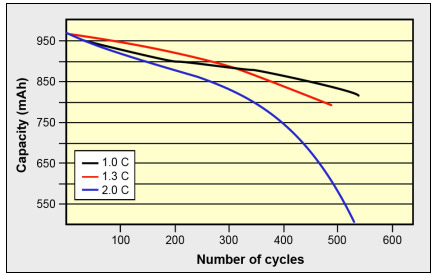
Assuming the first bar (Green eco) is up to 50A, second - 100A and third - 150A we're getting discharge rates of 1C, 2C and 3C for each bar respectively.
Sudden acceleration introduce current pikes and result in capacity loss with the same principle as illustrated on this graph:
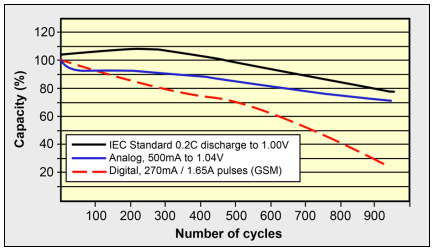
Driving the car in D sure is very responsive, but it goes into pikes very easily. ECO takes some getting used to and some planning, but is extremely smooth.
My wife (a very demanding passenger) appreciates the smoothness of acceleration and breaking in this mode.
I'm glad i can plug in at work. It was 47F this morning and i had to resort to heating the car. Did not have time to pre-heat. Normal 5 bars to get to work turned into 7. an 8 hour work day will give me 6.4 bars. Rather close to full : )
Also, today the car has passed a 1200 miles odometer mark. Comparing to the Smart car i had, it is ~30 gallons of fuel that i did not burn and pay for: ).
Sunday, October 14, 2012
Chademo Seattle Fred Myers
Tried it today. Really cool experience. I observed the charge indicator go up, sometimes as fast as 1 bar per minute. Subsequent bars were slower.
47 to 80 % took 14 minutes. The only drawback was that the blink charger would not charge two cars at the same time. Had to wait untill a Leaf leaves, then I had to re-initiate the charging. Apparently blink charger has a bug in it, since it did not let me select the desired charge level untill Nissan left.
The power came in handy since it looks like rain and hvac on the highway reduce range quite a bit.
Missing chargers near cinemas!
47 to 80 % took 14 minutes. The only drawback was that the blink charger would not charge two cars at the same time. Had to wait untill a Leaf leaves, then I had to re-initiate the charging. Apparently blink charger has a bug in it, since it did not let me select the desired charge level untill Nissan left.
The power came in handy since it looks like rain and hvac on the highway reduce range quite a bit.
Missing chargers near cinemas!
Friday, October 12, 2012
SCIB in US 2012 i-miev?
Not really. Not yet.
We still have older-style Yuasa batteries. Here is what i found on a Japanese web-site:
Most noteable characteristic of SCiB is lifespan. The number of cycles for a SCiB, according to Toshiba is 4000 as opposed to a thousand for Yuasa LEV50.
Here is a comparison of GS Yuasa vs Toshiba:

85% capacity is retained at charge cycles at 25 degrees centigrade (~70F). SCIB data was taken from a 4.2AH cell from EV-neo Honda bike. Capacity retention is 90% after 6000 cycles with the same temperature.
For a 1000 cycles, Lev capacity is 85%, whereas SCIB is 98%.
I'll do some math to project the retained capacity over time...
Source
We still have older-style Yuasa batteries. Here is what i found on a Japanese web-site:
Most noteable characteristic of SCiB is lifespan. The number of cycles for a SCiB, according to Toshiba is 4000 as opposed to a thousand for Yuasa LEV50.
Here is a comparison of GS Yuasa vs Toshiba:
For a 1000 cycles, Lev capacity is 85%, whereas SCIB is 98%.
I'll do some math to project the retained capacity over time...
Source
Today i tried the delayed charge start from the remote control.
I had a 50% discharged battery and a L2 charger, that typically does 3 bars per hour.
I needed 7, just to leave it a bit undercharged. So i did set the on to 10 hours from start and off to 12.5. In the morning i had full "tank" and the last bar disappeared in less than a mile. The downhill regen was better, but still not full. Justified.
The observation is that at the full "tank" the regen is still a bit impaired.
so L2 charger = 3 bars per hour
L1 charger = 0.67 bars per hour or 1 bar in 1.5 hours
With my driving a bar is 5 miles. That is trying to follow the speed limit +- 3 mph
I had a 50% discharged battery and a L2 charger, that typically does 3 bars per hour.
I needed 7, just to leave it a bit undercharged. So i did set the on to 10 hours from start and off to 12.5. In the morning i had full "tank" and the last bar disappeared in less than a mile. The downhill regen was better, but still not full. Justified.
The observation is that at the full "tank" the regen is still a bit impaired.
so L2 charger = 3 bars per hour
L1 charger = 0.67 bars per hour or 1 bar in 1.5 hours
With my driving a bar is 5 miles. That is trying to follow the speed limit +- 3 mph
Wednesday, October 10, 2012
So far so good
So far the operation has been smooth and reliable. I got the battery to zero bars once, and started charging immediately.
Tried to use the remote timer function and it worked great, charging the car early in the morning, just before going to work.
The morning routine of walking the dog and switching the heating on works great.
Noticing an increasing number of EVs near the free charging stations near my home.
Wondering how long the free cheese will last : ). It's great to know that that electricity is from extra solar panels our housing complex has for these purposes.
As for driving experience - still getting used to the quietness. Music is so much better. I like the twitters in the front. The speed - following the speed limit in general. Driving on Eco. Got accustomed to situations where you need to merge into fast traffic - just press harder.
Noticing the reduced regen on the fully charged car. The car protects the battery : ). Maybe i should leave the last bar uncharged, since the first few miles are downhill anyway...
Monday, October 1, 2012
i-miev LATCH system
This weekend we tried some newborn car seats in i-Miev. "Merry go round" store in Bellevue kindly allowed to try on the Greco seat. The news are not encouraging: in rear facing position there is no space for the front passenger to ride in comfort. The passenger was 5'4". So if you want to use the seat in i-miev, wait until the kid is old enough to be forward-facing in the car. Usually it is 2+ years.
We also tried Chicco keysystem 30 newborn seat. That, being about an inch shorter, still did not provide the front passenger the level of comfort and recline. Chicco was very easy to install and attach to LATCH.
So the only workaround that works for 1 baby is for the passenger to use the back seat and ride with the baby.
We also tried Chicco keysystem 30 newborn seat. That, being about an inch shorter, still did not provide the front passenger the level of comfort and recline. Chicco was very easy to install and attach to LATCH.
So the only workaround that works for 1 baby is for the passenger to use the back seat and ride with the baby.
Tuesday, September 25, 2012
The biggest drawback of charging EV is that you have to touch the charging cord which is often tingled and dirty with ground dust. Certainly gloves are a great idea!
Day 4 of owning an EV: Today I used the remote heater starter - great function for upcoming fall and winter. It was a bit of an overkill for now, and i had to ride with windows open for a couple of minutes.
The car is great for listening to music. Also today I did drive almost like regular, venturing into the third line occasionally.
Driving 27 miles to work only took 1/4 of the charge according to the indicator, suggesting that i'm quite good in eco-driving and that the range could be around 90 miles for that type of driving.
What i like is the calmness of the whole driving experience, and the torque for climbing the hills here on I-405. And when i need to merge i just switch from ECO to D, and the i-Miev catapults. No merging problems at all!
Day 4 of owning an EV: Today I used the remote heater starter - great function for upcoming fall and winter. It was a bit of an overkill for now, and i had to ride with windows open for a couple of minutes.
The car is great for listening to music. Also today I did drive almost like regular, venturing into the third line occasionally.
Driving 27 miles to work only took 1/4 of the charge according to the indicator, suggesting that i'm quite good in eco-driving and that the range could be around 90 miles for that type of driving.
What i like is the calmness of the whole driving experience, and the torque for climbing the hills here on I-405. And when i need to merge i just switch from ECO to D, and the i-Miev catapults. No merging problems at all!
Friday, September 21, 2012
Let the gasoline-free rides begin. Picked up a miev today. Ride is smoother, comparing to Smart forTwo I had. Nose is a little-bit longer, acceleration is comparable. Love the regen. Seat warmer is acceptably good, but it was better in the Smart.
Will try starting charge from iPhone app via chargepoint.com, since i have not yer received the RFID.
Will try starting charge from iPhone app via chargepoint.com, since i have not yer received the RFID.
Subscribe to:
Posts (Atom)